Beyond Installation: How Regular Home Energy Audits Protect Your Solar Panel Investment
By Dr. Krishan Kumar
Jan 25, 2026
2 min read
AdSense Content Placeholder
The decision to install solar panels is a significant long-term investment in your home's future and energy independence. You've likely focused on installation costs, panel efficiency, and government rebates. But what many homeowners overlook is the critical role of regular home energy audits in protecting that investment and ensuring your solar array performs optimally for decades.
Solar panels are designed to harness sunlight, but their efficiency can be severely hampered by preventable issues within your home's energy envelope. Think of it this way: a leaky bucket won't hold water, no matter how fast you pour it in. Similarly, a well-performing solar array can't overcome a fundamentally inefficient home.
Why an Energy Audit is Essential for Solar Owners:
Revealing Hidden Energy Drains: Before and especially after solar installation, an energy audit identifies areas where your home is losing heated or cooled air. This includes unnoticed air leaks around windows and doors, insufficient insulation in attics or walls, and inefficient HVAC systems. Addressing these issues reduces your overall energy demand, making your solar output go further.
Optimizing Panel Sizing and Performance: If an audit reveals you're using more energy than necessary due to inefficiencies, your solar system might be undersized for your actual needs, or conversely, you might be overproducing for an inefficient home. An audit helps you understand your true energy profile, allowing you to fine-tune your energy consumption and potentially improve the payback period of your solar investment.
Preventative Maintenance & Longevity: Beyond just energy loss, an auditor can spot potential issues that might indirectly affect your solar system. For instance, poor attic ventilation can lead to excessive heat buildup, which can subtly degrade panel performance over time. Addressing these underlying issues ensures your roof and its inhabitants (your solar panels) have a stable, long-lasting environment.
Proof of Diligence for Home Insurance: While not always a direct requirement, demonstrating proactive energy management through audits can be beneficial for home insurance claims related to energy systems. It shows you're maintaining your property responsibly, which can sometimes influence policy terms or claim outcomes.
What a Home Energy Audit Involves:
A professional energy audit typically includes:
Blower Door Test: To measure air leakage in your home.
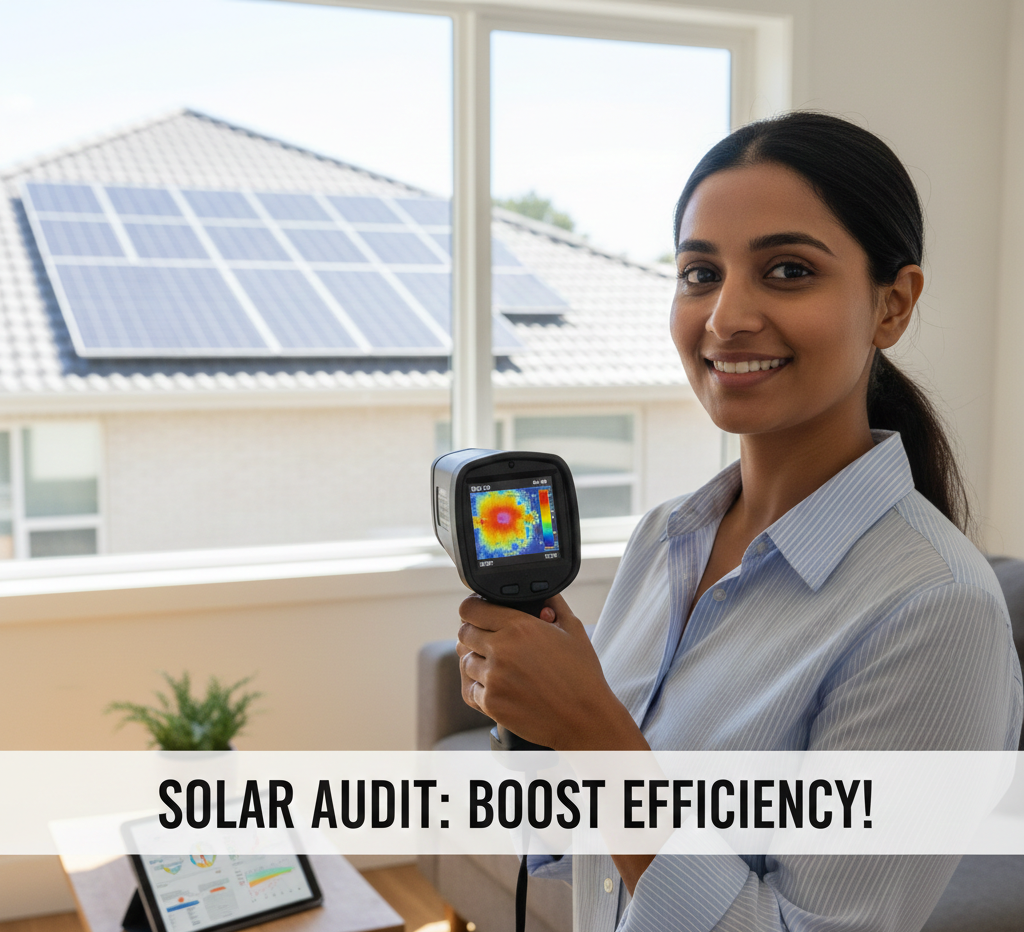
Thermal Imaging: To identify insulation gaps and air leaks visually.
HVAC System Inspection: Assessing the efficiency and condition of your heating and cooling systems.
Lighting and Appliance Review: Identifying high-energy consumption items.
When to Get an Audit:
It’s ideal to get an audit before installing solar panels to ensure your system is appropriately sized. However, a post-installation audit (every 3-5 years, or if you notice unexplained spikes in energy usage) is crucial for ongoing optimization and to protect your initial investment.
Disclaimer: This article provides general information and should not be considered a substitute for professional advice from a certified energy auditor or a licensed electrician. Always consult with qualified professionals regarding your home's specific energy needs and solar panel system.
Solar panels are designed to harness sunlight, but their efficiency can be severely hampered by preventable issues within your home's energy envelope. Think of it this way: a leaky bucket won't hold water, no matter how fast you pour it in. Similarly, a well-performing solar array can't overcome a fundamentally inefficient home.
Why an Energy Audit is Essential for Solar Owners:
Revealing Hidden Energy Drains: Before and especially after solar installation, an energy audit identifies areas where your home is losing heated or cooled air. This includes unnoticed air leaks around windows and doors, insufficient insulation in attics or walls, and inefficient HVAC systems. Addressing these issues reduces your overall energy demand, making your solar output go further.
Optimizing Panel Sizing and Performance: If an audit reveals you're using more energy than necessary due to inefficiencies, your solar system might be undersized for your actual needs, or conversely, you might be overproducing for an inefficient home. An audit helps you understand your true energy profile, allowing you to fine-tune your energy consumption and potentially improve the payback period of your solar investment.
Preventative Maintenance & Longevity: Beyond just energy loss, an auditor can spot potential issues that might indirectly affect your solar system. For instance, poor attic ventilation can lead to excessive heat buildup, which can subtly degrade panel performance over time. Addressing these underlying issues ensures your roof and its inhabitants (your solar panels) have a stable, long-lasting environment.
Proof of Diligence for Home Insurance: While not always a direct requirement, demonstrating proactive energy management through audits can be beneficial for home insurance claims related to energy systems. It shows you're maintaining your property responsibly, which can sometimes influence policy terms or claim outcomes.
What a Home Energy Audit Involves:
A professional energy audit typically includes:
Blower Door Test: To measure air leakage in your home.
Thermal Imaging: To identify insulation gaps and air leaks visually.
HVAC System Inspection: Assessing the efficiency and condition of your heating and cooling systems.
Lighting and Appliance Review: Identifying high-energy consumption items.
When to Get an Audit:
It’s ideal to get an audit before installing solar panels to ensure your system is appropriately sized. However, a post-installation audit (every 3-5 years, or if you notice unexplained spikes in energy usage) is crucial for ongoing optimization and to protect your initial investment.
Disclaimer: This article provides general information and should not be considered a substitute for professional advice from a certified energy auditor or a licensed electrician. Always consult with qualified professionals regarding your home's specific energy needs and solar panel system.
Reviewed By
Dr. Krishan Kumar CFA, MBA
Senior Financial Analyst with 15 years of experience.